
A water softener works quietly in the background, so it is easy to forget until salt runs out, water pressure changes or white scale starts returning. A simple water softener maintenance Calgary schedule prevents most of those surprises and helps the system regenerate efficiently through every season.
Calgary’s water hardness changes by season and location because the city draws from the Bow and Elbow Rivers. The City of Calgary notes that hardness is usually lowest during spring snowmelt and highest between December and February. That makes a calendar more useful than a one-time annual check: the system’s salt use, capacity and regeneration load can change as water conditions and household use change.
This guide gives Calgary homeowners a practical routine for salt-based water softeners. Always follow the model-specific instructions in your owner’s manual, and book service when a task requires opening the control valve, depressurizing plumbing or handling resin.
Quick Maintenance Schedule
- Every month: check salt level, look for bridges, confirm the display and inspect for leaks.
- Every three months: review salt use, test treated-water hardness and inspect accessible filters.
- Every spring: reassess settings after snowmelt and check the drain and overflow lines.
- Every summer: plan for vacation settings, higher guest use and hot-weather salt clumping.
- Every fall: prepare the installation area for winter and confirm the room will stay above freezing.
- Every winter: watch for higher hardness demand, unusual salt use and cold drafts around plumbing.
- Once a year: clean the brine tank, test system performance and arrange professional service if needed.
Why Calgary Water Softeners Need a Calendar
Maintenance is not only about adding salt. A softener depends on several parts working together: the resin tank removes calcium and magnesium, the brine tank makes the salt solution used during regeneration, the control valve measures or schedules cycles, and the drain line carries regeneration water away.
If one part is neglected, the system may still appear to run while delivering partially softened or hard water. A salt bridge can hide an empty space below the salt. A clogged pre-filter can reduce pressure. Incorrect time or hardness settings can trigger too many or too few regenerations. A slow leak can waste water without being obvious.
Calgary’s seasonal hardness variation adds another reason to test rather than guess. The right schedule catches changes early while keeping routine upkeep manageable.
Monthly Water Softener Upkeep
1. Check the Salt Level
Open the brine tank and look at the salt level. As a practical rule, keep salt above the visible water line and avoid packing the tank completely to the lid. Many households do well when the tank stays around one-half full, but the correct level depends on tank design and the manufacturer’s directions.
Do not automatically add a full bag every month. First confirm that the system is actually using salt. A level that never changes can point to a salt bridge, brine-draw problem, missed regeneration or programming issue.
2. Look for a Salt Bridge or Mushy Salt
A bridge is a hard crust that forms above an empty space. Salt mushing is a wet, compacted layer near the bottom. Both can prevent proper brine formation. Gently press the surface with a blunt handle. If it feels hollow, unusually hard or soft and sludge-like, stop adding salt until the condition is corrected.
Never strike the tank with a hammer or use a sharp object. Those methods can puncture the brine tank or damage internal parts.
3. Read the Control Display
Confirm the display is powered, the time is correct and no error code is showing. A power outage can reset the clock on some valves, causing regeneration to occur at an inconvenient time or not as programmed.
4. Inspect for Leaks and Unusual Water
Look around the bypass, inlet and outlet fittings, brine line, drain line and nearby floor. Check for drips, salt residue, standing water or damp drywall. Also pay attention to a sudden return of cloudy dishes, soap scum or mineral scale.
Every Three Months
Test the Water After the Softener
A simple hardness test at a cold-water tap served by the softener shows whether the system is meeting its setting. Test untreated water as well if a bypass or pre-softener sample point is available. Comparing the two readings is more useful than judging water by feel alone.
Review Salt Use and Regeneration Frequency
Note how many bags were added and whether household use changed. More occupants, guests, a leak or a new appliance can increase demand. Unexpectedly high salt use may indicate incorrect settings, frequent regeneration or a water leak. No salt use can indicate the system is not regenerating or drawing brine.
Check Pre-Filters
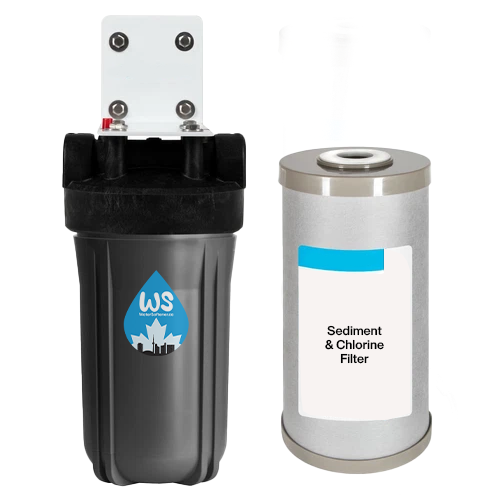
If the installation includes a sediment or chlorine pre-filter, inspect it according to its pressure-drop indicator or replacement schedule. A loaded filter can reduce flow through the whole home. Replace only with the correct cartridge and make sure the housing is sealed properly.
Spring Maintenance in Calgary
Spring snowmelt can change Calgary’s source-water hardness. If the softener was programmed from a winter test, retest the untreated water before changing the hardness setting. Do not lower the setting merely because the calendar says spring; use an actual test and follow the valve manufacturer’s programming method.
- Inspect the drain hose after winter and confirm it is secure, unrestricted and properly air-gapped.
- Check the brine-tank overflow line and floor drain for obstructions.
- Clean dust around the valve and power supply without spraying the equipment.
- Look for condensation or moisture caused by warmer air around cold pipes.
- Confirm outdoor irrigation lines are not unnecessarily supplied with softened water unless the plumbing was intentionally designed that way.
Summer and Vacation Maintenance
Summer can bring travel, guests and higher water use. Before a short trip, check salt, confirm there are no leaks and leave the unit in its normal service position unless the manufacturer provides a vacation mode. Do not unplug a metered softener without understanding how it stores time and usage data.
For a longer absence, follow the system manual and coordinate any whole-home water shutoff with the softener’s bypass and regeneration schedule. After returning, restore the water slowly, confirm the valve is in service and run a cold tap to clear stagnant plumbing. If the system sat unused for an extended period, ask a technician whether sanitizing or a manual regeneration is appropriate.
Fall Preparation
Fall is the time to prepare the mechanical room before Calgary temperatures drop. Seal cold drafts around exterior penetrations, keep stored items away from the valve and drain line, and confirm the heating system will protect all water-treatment equipment.
- Make sure the softener, brine line, drain and filters are in conditioned space.
- Check that no flexible line is pressed against a cold exterior wall.
- Confirm the outlet and transformer are dry and secure.
- Test the bypass so you know how it operates during an emergency, without leaving it in bypass.
- Schedule service before the holiday season if performance has been declining.
Winter Maintenance
The City of Calgary reports that water hardness is commonly highest from December through February. A correctly sized and programmed softener should handle this, but the system may consume salt faster when hardness or household demand rises.
Check salt and treated-water hardness monthly during winter. Keep the room above freezing at all times. If the softener is in an attached garage, crawlspace or other vulnerable area, do not rely on a small space heater as the only protection. A frozen valve, drain or brine line can crack and cause significant water damage.
Annual Water Softener Maintenance
Clean the Brine Tank
Pentair’s water softener maintenance guidance recommends cleaning the brine tank about once a year, ideally when the salt level is already low. Put the system in bypass or follow the model’s service procedure, remove remaining salt and sludge, clean with a mild solution approved by the manufacturer, rinse thoroughly and reassemble the brine well and float correctly.
If you are unsure how to disconnect the brine line or safely move the tank, book water softener service Calgary support rather than forcing fittings.
Inspect the Valve and Regeneration Cycle
Listen through one complete manual regeneration when practical. Confirm the valve advances normally, draws brine and sends water to the drain only during the expected stages. Continuous drain flow, a stalled display or an unusually noisy motor needs service.
Confirm the Hardness and Capacity Settings
Household size, water source and water use can change over time. A technician can test raw and treated water, review salt efficiency, check reserve capacity and verify that the unit is not regenerating more often than necessary.
Sanitize Only as Directed
Some manufacturers recommend periodic sanitizing, especially after installation, extended disuse or contamination. The chemical, amount and procedure are model-specific. Do not pour household cleaners, acids or pool chemicals into the brine tank.
Maintenance Needs for Older Systems
As a unit ages, watch trends rather than one isolated symptom. More frequent regeneration, rising salt use, falling pressure, repeated leaks, inconsistent softness or resin particles at fixtures can point to wear. A valve repair, injector cleaning or resin replacement may restore performance, but repeated major repairs can make replacement more sensible.
Keep a simple record of service dates, salt purchases, hardness results and error codes. That history helps a technician distinguish a programming issue from resin exhaustion or mechanical failure.
When to Call Water Softener Service in Calgary
- Hard water returns even though the brine tank has salt.
- The salt level does not fall over several weeks of normal use.
- Water pressure drops through the system.
- The brine tank is unusually full or repeatedly overflows.
- The valve displays an error or cannot complete regeneration.
- Water flows continuously to the drain.
- A leak appears around the valve, bypass or plumbing connections.
- Resin beads appear in aerators, toilets or fixtures.
- The system is exposed to freezing or has been frozen.
Bypass the system if there is an active leak or resin is entering the plumbing, then arrange professional help. Do not disassemble a pressurized valve or resin tank.
Frequently Asked Questions
How often should a water softener be serviced?
Homeowners should complete basic checks monthly and a deeper brine-tank and performance review annually. Professional service frequency depends on the equipment, water conditions, age and any recurring symptoms.
How often should I add salt?
Add salt based on the level and actual use, not a fixed date. Many Calgary households check monthly and refill every four to eight weeks, but a larger family or a harder winter supply may use salt faster.
Can I overfill the brine tank?
Yes. Filling to the lid can encourage bridging and makes inspection difficult. Follow the manual and leave enough space to see the salt condition.
Should there be water in the brine tank?
A small amount may be normal depending on the valve design and cycle stage. A tank that remains unusually full, overflows or cannot draw down needs troubleshooting.
Does a water softener need maintenance during winter?
Yes. Check salt and performance, protect the installation from freezing and watch for increased salt demand as Calgary water hardness rises seasonally.
What is the most important maintenance task?
Consistent monthly observation is the most valuable habit. Catching a change in salt use, hardness, pressure or leakage early prevents a small issue from becoming a larger repair.
Keep Your Calgary Softener Reliable Year-Round
If salt use, pressure or hard-water symptoms have changed, explore our Calgary city-water systems and book a free water test. Water Softener Calgary will test your water, review the settings and recommend only the maintenance or repair your system actually needs.


