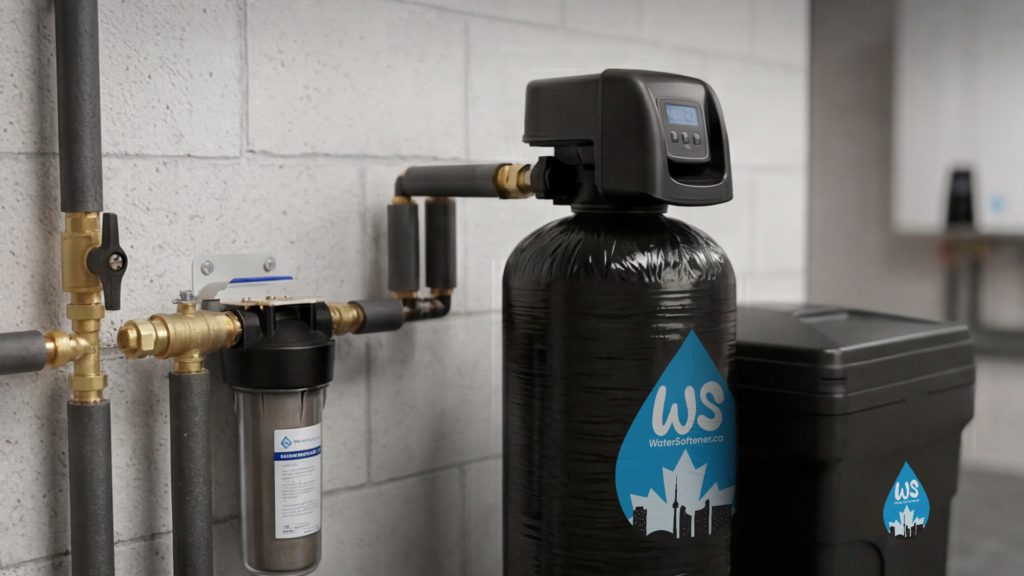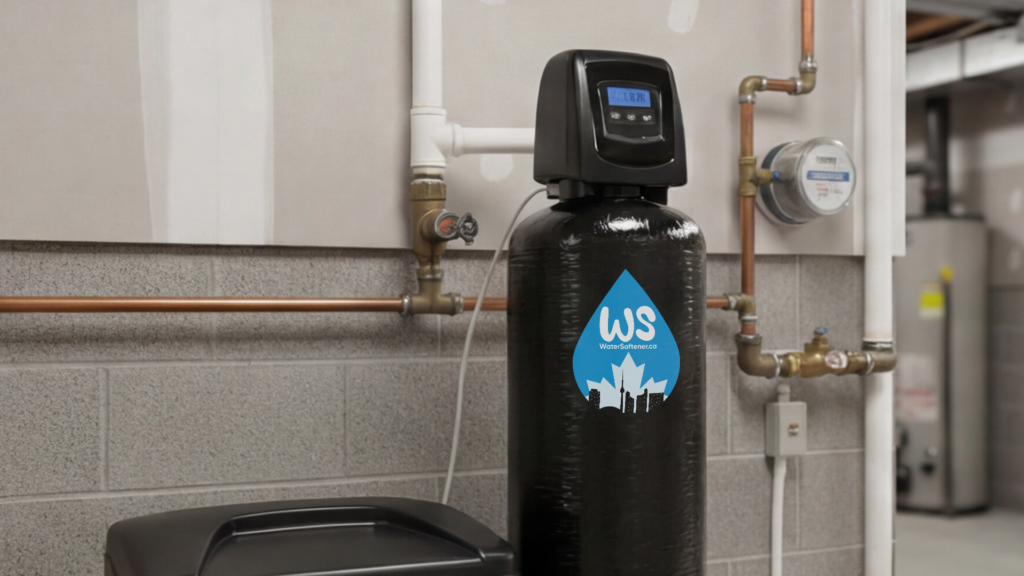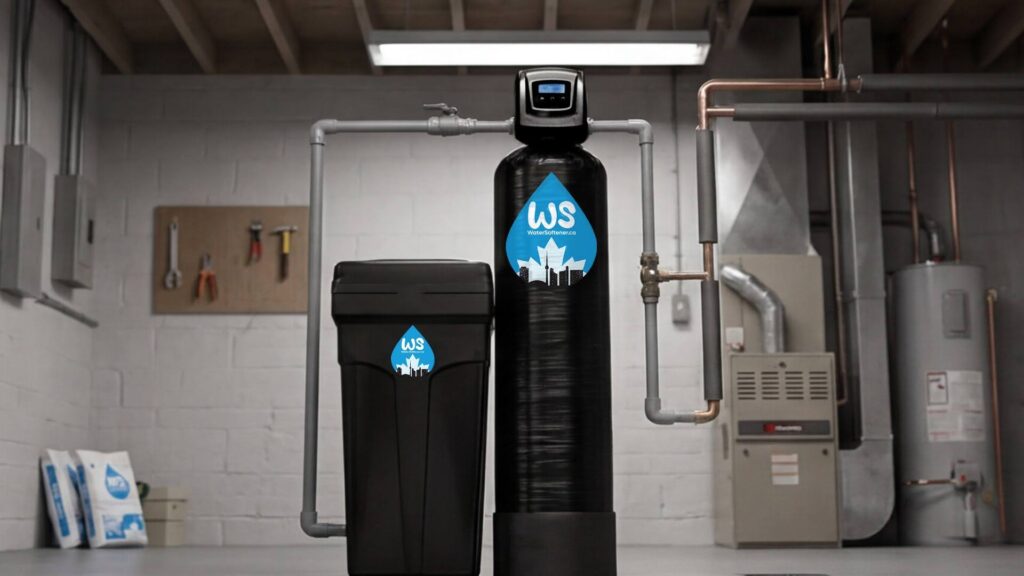
Knowing where to install water softener Calgary homeowners can rely on is just as important as choosing the right unit. A water softener can be high quality, correctly sized, and professionally built, but if it is installed in the wrong location, it may only soften part of the home, create drain problems, reduce service access, or make salt refills frustrating.
The best location is usually close to the main water line, near a safe drain, near a power outlet, protected from freezing, and accessible for maintenance. For most Calgary homes, that often means the basement, mechanical room, utility room, or the area close to the water heater.
The goal is not simply to “fit” the unit somewhere. The goal is to place it where it can treat the right water, drain safely, regenerate properly, and remain easy to service for years.
Calgary homes often deal with hard water because local water carries minerals such as calcium and magnesium. Water Softener Calgary notes that Calgary water can range from 152–290 mg/L as CaCO₃, which is hard enough to contribute to visible scale, dry skin, soap scum, and buildup in appliances. If you are still comparing solutions before deciding the installation spot, review city water softener and filter options for municipal homes or well water softener and filter options if your property uses a private well.
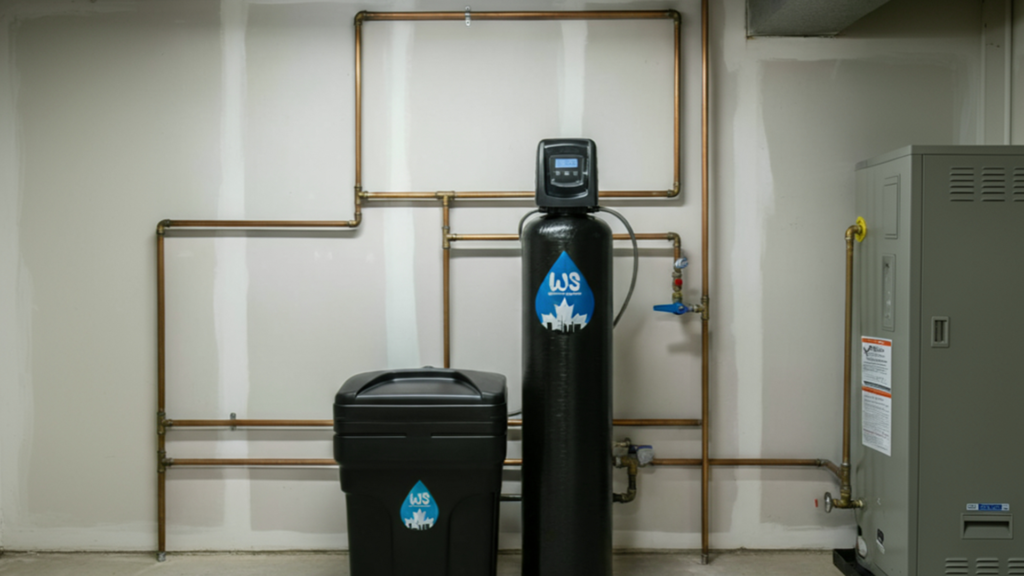
Why Placement Matters So Much
A water softener is not a decorative appliance that can be placed anywhere with floor space. It connects to the plumbing system and controls how water moves through the home.
The installation location affects:
| Placement Factor | Why It Matters |
| Main water line access | Determines whether the whole home or only part of it receives soft water |
| Drain access | Needed for regeneration discharge |
| Power access | Needed for most modern control valves |
| Service space | Needed for salt refills, bypass access, and future repairs |
| Temperature protection | Prevents freezing or equipment damage |
| Plumbing layout | Helps avoid treating outdoor lines unnecessarily |
| Water source | City water and well water may require different equipment placement |
This is why the question is not only where to install water softener Calgary homeowners can fit physically. The better question is: where can the system treat the right water without creating future maintenance problems?
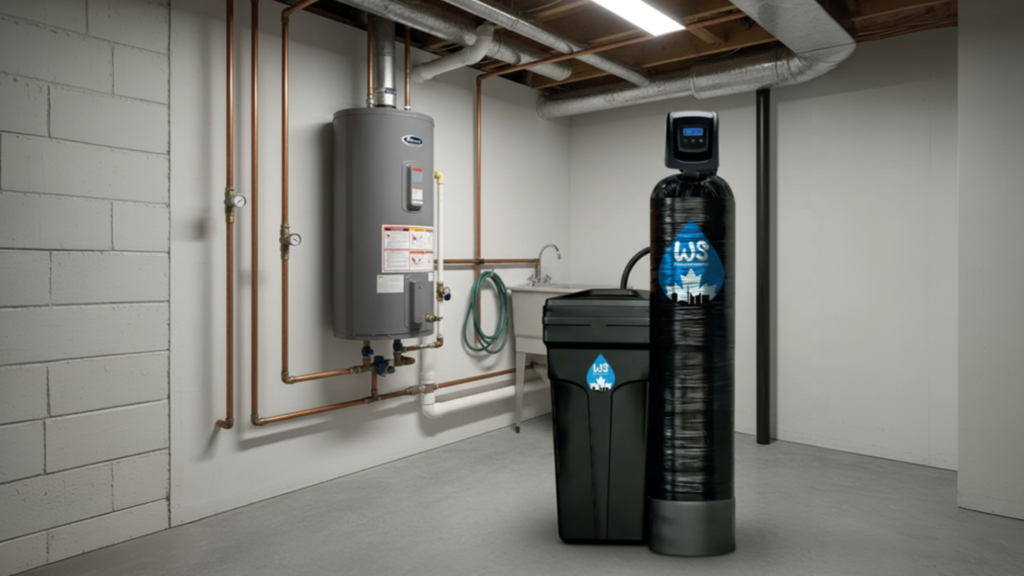
Best Location: Near the Main Water Line
The most important location rule is simple: install the softener near where water enters the home.
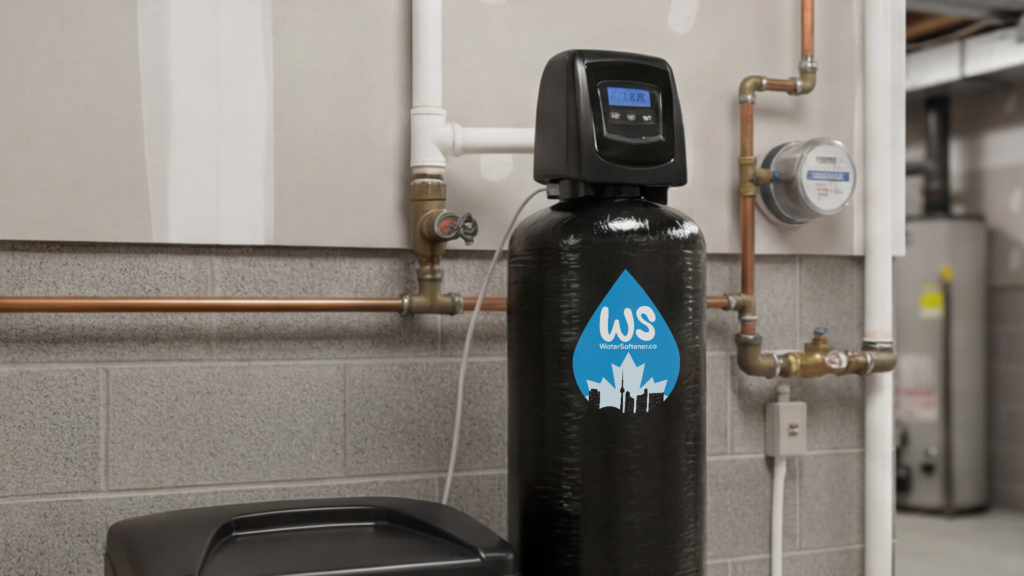
In many Calgary homes, the main water line enters through the basement or mechanical room. Installing the softener close to this point allows it to treat water before it branches off to bathrooms, laundry, dishwasher, water heater, and other fixtures.
If the softener is installed too far downstream, some parts of the home may still receive hard water. For example, one bathroom, laundry area, or utility sink may be missed depending on how the plumbing branches.
A good installer will identify:
- The main water shutoff valve
- The incoming water line
- The water meter area, if visible
- The line feeding the water heater
- Branches going to outdoor taps
- Any line that may feed the kitchen cold tap
- Existing filters, conditioners, or pressure equipment
This step matters because soft water should reach the areas where hard water causes the most problems: showers, laundry, dishwasher, water heater, and indoor fixtures.
Best Location: Mechanical Room or Utility Room
For many homeowners wondering where to install water softener Calgary homes usually allow, the mechanical room is the most practical answer.
A mechanical room often has the right combination of plumbing access, drain access, power access, and service space. It may already contain the water heater, furnace, floor drain, and other home systems, making it easier to install the softener cleanly.
A mechanical room is usually a good option when it has:
- Exposed plumbing
- A nearby floor drain
- Enough space for the resin tank and brine tank
- A nearby outlet
- Clear access to the main water line
- Protection from freezing
- Room to stand and service the system
This location also keeps the equipment out of daily living areas. The homeowner can check salt, access the bypass valve, and schedule service without moving furniture or opening finished walls.
However, the mechanical room should not be overloaded. If it is packed with storage, tools, boxes, and cleaning supplies, the softener may be difficult to access later. Good installation planning includes leaving enough space around the tank and valve, not just enough space to squeeze the system in.
Basement Installation: Usually the Best Fit
In Calgary, basements are often the most common place for water softener installation. That is because the basement usually provides access to the main line, drain, and mechanical systems.
A basement installation works well when:
- Plumbing is visible
- The space is heated
- There is a floor drain nearby
- The water heater is close
- There is a safe outlet
- The area is not finished too tightly
- Salt can be carried down easily
The basement also helps keep the softener protected from outdoor temperature changes. A water softener should not be installed in a place where it can freeze. Freezing can damage tanks, valves, fittings, and brine lines.
The only downside is convenience. If the softener is placed far from the stairs or behind heavy storage, adding salt may become annoying. The best basement location balances plumbing function with regular homeowner access.
Why Drain Access Is Non-Negotiable
A traditional salt-based water softener needs a drain because it regenerates. During regeneration, the system flushes hardness minerals from the resin bed and sends wastewater out through a drain line.
That means drain access is one of the biggest factors in deciding where to install water softener Calgary homes can support.
Good drain options may include:
- Floor drain
- Utility sink
- Laundry standpipe
- Mechanical room drain
- Approved drain connection
The drain should be close enough for a clean route. A long, loose, or awkward drain line can become a problem over time. It may move during regeneration, create noise, or be harder to secure properly.
A professional installer should check:
| Drain Detail | What It Prevents |
| Secure drain line | Prevents movement during regeneration |
| Safe air gap or drain method | Helps reduce backflow risk |
| Open drain | Prevents backup issues |
| Short route | Reduces clutter and failure points |
| Proper height | Supports reliable discharge |
| Accessible path | Makes service and inspection easier |
If there is no nearby drain, the installer may need to recommend another location or discuss plumbing changes. Choosing a location without proper drain access just because it looks convenient is usually a mistake.
Power Outlet Access
Most modern water softeners need power for the control valve. The control valve manages regeneration timing, metering, and system programming.
That means the ideal installation location should have a safe outlet nearby.
Before installation, check:
- Is there a working outlet near the planned location?
- Is the outlet easy to reach?
- Is it protected from water exposure?
- Is it already overloaded?
- Will the cord create a trip hazard?
- Can the unit stay plugged in permanently?
A permanent extension cord should not be the plan. If there is no safe outlet nearby, the installer may suggest a different placement or recommend electrical work before installation.
This is one reason the mechanical room often works well. It usually has both plumbing and power access in one area.
Keep the Water Heater in Mind
A water softener is commonly installed before the water heater, not after it. That way, softened water enters the water heater and helps reduce scale buildup inside the tank.
Hard water can leave mineral deposits inside water heaters, dishwashers, kettles, and other water-using appliances. Water softening reduces the calcium and magnesium minerals that cause hardness, which helps limit scale-related problems.
If the softener is installed after the water heater, hot water may remain hard. That defeats one of the biggest reasons homeowners install a softener in the first place.
A proper layout usually sends softened water to:
- Water heater
- Showers
- Bathroom sinks
- Laundry
- Dishwasher
- Indoor fixtures
Outdoor hose bibs are often left unsoftened because lawns and outdoor cleaning do not usually need softened water.
Should the Kitchen Cold Tap Be Softened?
This depends on homeowner preference.
Some homeowners want soft water throughout the entire house, including the kitchen cold tap. Others prefer to keep the kitchen cold tap unsoftened for drinking and cooking, especially if they are concerned about sodium from ion exchange softening.
Health Canada notes that homeowners using a softener may want a separate unsoftened supply for cooking and drinking in certain situations, especially where sodium intake is a concern.
Another option is to soften the home and add reverse osmosis drinking water at the kitchen sink. Water Softener Calgary’s city water page includes setups that combine softening, filtration, and optional RO for drinking water.
This decision should be made before installation. Changing it later may require additional plumbing work.
Where Not to Install a Water Softener
Some locations seem convenient at first but create problems later.
Avoid installing a water softener in areas that are:
- Unheated
- Exposed to freezing
- Too far from the main water line
- Too far from a drain
- Too far from power
- Too tight for service access
- Behind finished walls without access
- In a crawl space that is hard to reach
- In a spot where salt refills are difficult
- In a place where leaks could damage finished materials
A water softener should never be placed where it cannot be inspected, bypassed, or serviced easily. It also should not be installed in a location where a small leak could go unnoticed for a long time.
Good placement protects both the system and the home.
Finished Basement Considerations
Many Calgary homes have finished basements, which can make installation more complicated. Finished walls may hide the main water line, drain access, or plumbing branches.
If your basement is finished, the installer may need to check:
| Finished Basement Issue | Why It Matters |
| Hidden main line | May require access panel or alternate location |
| No visible drain | Drain route may need planning |
| Limited mechanical room space | System may be harder to fit |
| Finished flooring nearby | Leak protection becomes more important |
| Drywall around plumbing | Plumbing changes may require cutting |
| Storage around utilities | Service access may be restricted |
A finished basement does not prevent installation, but it can affect the timeline, location, and complexity. This is why photos or a site visit can be helpful before the appointment.
Well Water Homes Need More Planning
If your property uses well water, placement can be more complex. A basic softener may not be enough if the water also contains iron, manganese, sediment, odour, or bacteria concerns.
Water Softener Calgary explains that well-water systems may combine iron and manganese filtration, softening, optional UV disinfection, and reverse osmosis drinking water. That means the installation area may need space for more than one tank or treatment stage.
A well-water setup may include:
- Sediment pre-filter
- Iron filter
- Manganese treatment
- Softener
- UV system
- Pressure tank coordination
- Reverse osmosis drinking water system
For well water, the best location is not only near the main line. It must also allow the correct treatment order. Installing equipment in the wrong sequence can reduce performance.
For these homes, review well water softener and filter options before deciding where the system should go.
City Water Homes May Need Softening Plus Filtration
For municipal homes, the installation location may also depend on whether you are installing a softener alone or a softener plus filtration.
Calgary city water is treated, but homeowners may still notice hardness, chlorine taste, chlorine smell, scale, or inconsistent cleaning results. Water Softener Calgary’s city water page explains that city water treatment can include carbon filtration, water softening, and optional reverse osmosis for drinking water.
If you are installing both a softener and filtration, you need enough space for:
- Softener resin tank
- Brine tank
- Carbon filter or chlorine removal tank
- RO system if included
- Drain access
- Bypass valves
- Service space
This is why homeowners should avoid choosing the tightest possible location. A little extra space can make maintenance much easier.
Service Access Matters More Than People Think
A water softener needs ongoing access. Even a low-maintenance system still needs salt checks, occasional testing, and service access.
The location should allow easy access to:
- Brine tank lid
- Salt storage area
- Control valve
- Bypass valve
- Drain line
- Power plug
- Plumbing connections
- Filter cartridges if included
A common mistake is installing the system in a corner where the brine tank lid cannot open properly. Another mistake is placing storage directly in front of the bypass valve.
A professional installation should leave room for the homeowner and service technician to work comfortably.
Quick Placement Checklist
Use this checklist when deciding where to install water softener Calgary homes can support properly:
- Is the location close to the main water line?
- Is it before the water heater?
- Is there a nearby drain?
- Is there a safe power outlet?
- Is the area heated and protected from freezing?
- Is there enough room for both tanks?
- Can the brine tank lid open fully?
- Can the bypass valve be reached quickly?
- Is the drain line route clean and secure?
- Are outdoor taps being bypassed if needed?
- Has the kitchen cold tap decision been made?
- Is there room for filtration if needed?
- Can salt be carried to the location easily?
- Is there enough space for future repairs?
If the answer is no to several of these, the location may not be the best choice.
Best Location by Home Type
| Home Type | Best Installation Area |
| Standard Calgary home | Basement or mechanical room near main line |
| Finished basement | Mechanical room with visible plumbing and drain access |
| Smaller home | Utility room or compact mechanical space with service clearance |
| Large family home | Mechanical room with enough room for higher-capacity equipment |
| City water home | Near main line, with space for softener and optional filtration |
| Well water home | Near pressure equipment and main line, with room for multiple treatment stages |
| Home with limited drain access | Location may need extra plumbing planning |
The right location depends on plumbing, not just convenience.
Final Takeaway
The best place to install a water softener in a Calgary home is usually near the main water line, before the water heater, close to a drain, close to power, protected from freezing, and easy to access for salt refills and service.
For many homes, that means the basement mechanical room. For finished basements, smaller homes, or well-water properties, the installer may need to review the plumbing more carefully before choosing the final location.
Before installation, compare city water softener and filter options if your home uses municipal water. If you are on a well, review well water softener and filter systems first. If you are unsure what your water needs or where the system should go, book a free water test before installation day.
FAQs
Where is the best place to install a water softener in Calgary?
The best place is usually the basement or mechanical room near the main water line, close to a drain, close to power, and before the water heater.
Can a water softener be installed in a mechanical room?
Yes. A mechanical room is often one of the best locations because it usually has plumbing, drain access, power, and service space in one area.
Does a water softener need to be near the main water line?
Yes. Installing near the main water line helps the system soften water before it branches to showers, laundry, dishwasher, and the water heater.
Should a water softener be installed before the water heater?
Usually, yes. Installing before the water heater allows softened water to enter the heater, which helps reduce scale buildup inside the tank.
Does a water softener need a floor drain?
A salt-based water softener needs a drain for regeneration water. A floor drain, utility sink, laundry standpipe, or approved drain connection may be used depending on the home.
Can I install a water softener in a finished basement?
Yes, but finished basements may require more planning because plumbing and drains may be hidden behind walls or tight mechanical room layouts.
Should outdoor taps be softened?
Usually no. Outdoor taps are often left unsoftened because lawns, gardens, and exterior cleaning do not need soft water.
Should the kitchen cold tap be softened?
It depends. Some homeowners soften the kitchen cold tap, while others keep it unsoftened for drinking and cooking or add reverse osmosis for drinking water.
Can a water softener freeze?
Yes. A softener should be installed in a heated area protected from freezing. Freezing can damage tanks, valves, fittings, and brine lines.
What if there is no drain near the main water line?
The installer may recommend another location, a different drain route, or plumbing changes. Drain access should be planned before installation starts.